The quote in the title comes from Gandhi. This quote is simple, but the more I think about it the more profound I find it. What do soldiers do? They train, they make strategy, they cooperate, they put the good of others' before their own good, they sweat, they bleed, they serve.
Man Hee Lee, the honorary chairman of MANNAN, has done all of the things above (and more) in the name of peace. This is one of the reasons I am proud to be a member of MANNAM and so excited about how MANNAM will be used to bring peace to the world.
Please join us as soldier of service and fighters for peace.
레이블이 Man Hee Lee Peace advocate인 게시물을 표시합니다. 모든 게시물 표시
레이블이 Man Hee Lee Peace advocate인 게시물을 표시합니다. 모든 게시물 표시
2013년 10월 6일 일요일

2013년 7월 27일 토요일
MANNAM : Word has peace and touches people's heart : J. Donald Walters

You will find peace not by trying to escape your problems, but by confronting them courageously.
You will find peace not in denial, but in victory.
J. Donald Walters

+
When Light meets Light, there is Victory
Have you heard of it?
very familiar sound? :)
This is a main slogan of MANNAM Volunteer Association.
MANNAM Volunteer Association considers people who have willingness to help others regardless of Nationalities, Religion, Sex, Ages.. as light which is so necessary.
A person who is light meets another person who is so, there will be a victory beyond darkness.
It's what Man Hee Lee, such a peace advocate said.
2013년 7월 19일 금요일
MANNAM : Word has peace and touches people's heart : Thich Nhat Hanh and peace advocate, Man Hee Lee

Everyday we do things, we are things that have to do with peace.
If we are aware of our life, our way of looking at things, we will know how to make peace right in the moment, we are alive.
Thich Nhat Hanh
 |
| Thich Nhat Hanh via http://records.photodharma.net/ |
Thích Nhất Hạnh(born October 11, 1926) is a Vietnamese Zen Buddhist monk, teacher, author, poet and peace activist.
He lives in the Plum Village Monastery in the Dordogne region in the South of France, travelling internationally to give retreats and talks.
He coined the term Engaged Buddhism in his book Vietnam: Lotus in a Sea of Fire.
A long-term exile, he was given permission to make his first return trip to Vietnam in 2005.
Nhất Hạnh has published more than 100 books, including more than 40 in English.
Nhat Hanh is active in the peace movement, promoting non-violent solutions to conflict.
 |
| Man Hee Lee via Stevens Lee's blog |
Lee was born into a farming family in Gyeongbuk Cheongdo, on September 15, 1931, and claims to be the descendant of royalty from the Joseon Dynasty. His name was given to him by his grandfather, who had supposedly dreamt of a light emerging from the heavens before Lee was born. Lee was thus named "Man Hee (Hanja: 萬熙)", which means a complete and perfect light.
+
peace activist...
Peace leader..
Peace maker..
Peace advocate..
In the present age, who is the true PEACE ADVOCATE?
2013년 7월 17일 수요일
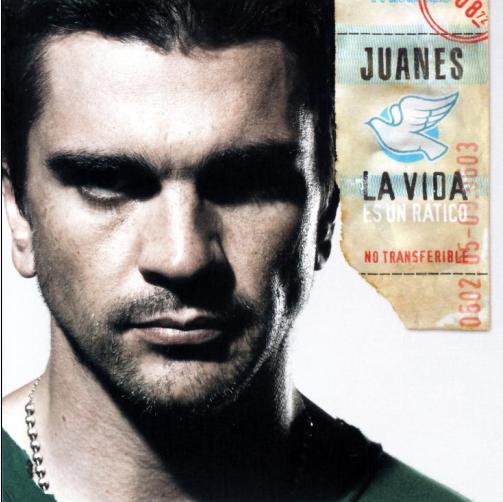
Peace Leader such as Man Hee Lee : Juanes
Juanes: Grammy-award-winning musician talks peace with BBC

3 May 2013 Last updated at 17:01 GMT Help
Grammy-award-winning Colombian musician Juanes is known for his passionate lyrics exploring themes of peace and love.
He has sold 16 million albums in his career, making him the world's top all Spanish-language rock artist.
Juanes has also become a global peace activist, inspired by his childhood in Medellin at the height of civil war. His foundation, Mi Sangre, promotes peace in Colombia by empowering youth affected by violence to become agents of change in their communities.
He is also a co-founder of Paz sin Fronteras, an organisation that uses music to promote peace. In 2008, when tensions rose between Colombia, Ecuador and Venezuela, Juanes played a concert on the border between Colombia and Venezuela to call for a peaceful resolution to the conflict.
He has been named one of Time magazine's 100 Most Influential People in the World, and he received an award for distinguished humanitarian leadership from the Atlantic Council in Washington DC. Before the ceremony, Juanes sat down with the BBC's Katty Kay.
+It would be so cool Man Hee Lee and Juanes have a time to talk about peace together.
They both went through war and talk about Peace.
Regardless nationality, race, age, people can be united as ONE for peace
3 May 2013 Last updated at 17:01 GMT Help
Grammy-award-winning Colombian musician Juanes is known for his passionate lyrics exploring themes of peace and love.
He has sold 16 million albums in his career, making him the world's top all Spanish-language rock artist.
Juanes has also become a global peace activist, inspired by his childhood in Medellin at the height of civil war. His foundation, Mi Sangre, promotes peace in Colombia by empowering youth affected by violence to become agents of change in their communities.
He is also a co-founder of Paz sin Fronteras, an organisation that uses music to promote peace. In 2008, when tensions rose between Colombia, Ecuador and Venezuela, Juanes played a concert on the border between Colombia and Venezuela to call for a peaceful resolution to the conflict.
He has been named one of Time magazine's 100 Most Influential People in the World, and he received an award for distinguished humanitarian leadership from the Atlantic Council in Washington DC. Before the ceremony, Juanes sat down with the BBC's Katty Kay.
+It would be so cool Man Hee Lee and Juanes have a time to talk about peace together.
They both went through war and talk about Peace.
Regardless nationality, race, age, people can be united as ONE for peace
2013년 7월 15일 월요일
MANNAM : Word has peace and touches people's heart : Mahatma Gandhi

A coward is incapable of exhibiting love.
It is the prerogative of the brave.
-Mahatma Gandhi-

Mahatma Gandhi
Name: Mahatma Gandhi
Occupation: Anti-War Activist
Birth Date: October 02, 1869
Death Date: January 30, 1948
Education: Samaldas College at Bhavnagar, Gujarat, University College London
Place Of Birth: Porbandar, Kathiawar, India
Place Of Death: New Delhi, India
Full Name: Mohandas Karamchand Gandhi
Born on October 2, 1869, in Porbandar, India, Mahatma Gandhi studied law and came to advocate for the rights of Indians, both at home and in South Africa. Gandhi became a leader of India's independence movement, organizing boycotts against British institutions in peaceful forms of civil disobedience. He was killed by a fanatic in 1948.
Spiritual and Political Leader
Indian nationalist leader Mohandas Karamchand Gandhi, more commonly known as Mahatma Gandhi, was born on October 2, 1869, in Porbandar, Kathiawar, India. He studied law in London, England, but in 1893 went to South Africa, where he spent 20 years opposing discriminatory legislation against Indians. As a pioneer of Satyagraha, or resistance through mass non-violent civil disobedience, he became one of the major political and spiritual leaders of his time. Satyagraha remains one of the most potent philosophies in freedom struggles throughout the world today.
Fight for Indian Liberation
In 1914, Gandhi returned to India, where he supported the Home Rule movement, and became leader of the Indian National Congress, advocating a policy of non-violent non-co-operation to achieve independence. His goal was to help poor farmers and laborers protest oppressive taxation and discrimination. He struggled to alleviate poverty, liberate women and put an end to caste discrimination, with the ultimate objective being self-rule for India.
Following his civil disobedience campaign (1919-22), he was jailed for conspiracy (1922-24). In 1930, he led a landmark 320 km/200 mi march to the sea to collect salt in symbolic defiance of the government monopoly. On his release from prison (1931), he attended the London Round Table Conference on Indian constitutional reform. In 1946, he negotiated with the Cabinet Mission which recommended the new constitutional structure. After independence (1947), he tried to stop the Hindu-Muslim conflict in Bengal, a policy which led to his assassination in Delhi by Nathuram Godse, a Hindu fanatic.
Death and Legacy
Even after his death, Gandhi's commitment to non-violence and his belief in simple living--making his own clothes, eating a vegetarian diet, and using fasts for self-purification as well as a means of protest -- have been a beacon of hope for oppressed and marginalized people throughout the world.
2013년 7월 11일 목요일
MANNAM Peace Advocates : Russell Einstein Manifesto in 1955
 |
| via http://pw20c.mcmaster.ca/ |
The full text of Russell Einstein Manifesto
In the tragic situation which confronts humanity, we feel that scientists should assemble in conference to appraise the perils that have arisen as a result of the development of weapons of mass destruction, and to discuss a resolution in the spirit of the appended draft.
We are speaking on this occasion, not as members of this or that nation, continent, or creed, but as human beings, members of the species Man, whose continued existence is in doubt. The world is full of conflicts; and, overshadowing all minor conflicts, the titanic struggle between Communism and anti Communism.
Almost everybody who is politically conscious has strong feelings about one or more of these issues; but we want you, if you can, to set aside such feelings and consider yourselves only as members of a biological species which has had a remarkable history, and whose disappearance none of us can desire.
We shall try to say no single word which should appeal to one group rather than another. All, equally, are in peril, and, if the peril is understood, there is hope that they may collectively avert it.
We have to learn to think in a new way. We have to learn to ask ourselves, not what steps can be taken to give military victory to whatever group we prefer, for there are no longer such steps; the question we have to ask ourselves is: what steps can be taken to prevent a military contest of which the issue must be disastrous to all parties?
The general public, and even many men in position of authority, have not realized what would be involved in a war with nuclear bombs. The general public still thinks in terms of obliteration of cities. It is understood that the new bombs are more powerful than the old, and that, while one A-bomb could obliterate Hiroshima, one H- bomb could obliterate the largest cities, such as London, New York and Moscow.
No doubt in an H-bomb war great cities would be obliterated. But this is one of the minor disasters that would have to be faced. If everybody in London, New York and Moscow were exterminated, the world might, in the course of a few centuries, recover from the blow. But we know, especially since the Bikini test, that nuclear bombs can gradually spread destruction over a very much wider area than had been supposed.
It is stated on very good authority that a bomb can now be manufactured which will be 2,500 times as powerful as that which destroyed Hiroshima. Such a bomb, if exploded near the ground or under water, sends radioactive particles into the upper air. They sink gradually and reach the surface of the earth in the form of a deadly dust or rain. It was this dust which infected the Japanese fishermen and their catch of fish.
No one knows how widely such lethal radioactive particles might be diffused, but the best authorities are unanimous in saying that a war with H-bombs might quite possibly put an end to the human race. It is feared that if many H-bombs are used there will be universal death—sudden only for a minority but for the majority a slow torture of disease and disintegration.
Many warnings have been uttered by eminent men of science and by authorities in military strategy. None of them will say that the worst results are certain. What they do say is that these results are possible, and no one- can be sure that they will not be realized. We have not yet found that the views of experts on this question depend in any degree upon their politics or prejudices. They depend only, so far as our researches have revealed, upon the extent of the particular expert's knowledge. We have found that the men who know most are the most gloomy.
Here, then, is the problem which we present to you, stark and dreadful and inescapable: shall we put an end to the human race; or shall mankind renounce war? People will not face this alternative because it is so difficult to abolish war.
The abolition of war will demand distasteful limitations of national sovereignty. But what perhaps impedes understanding of the situation more than anything else is that the term "mankind" feels vague and abstract. People scarcely realize in imagination that the danger is to themselves and their children and their grandchildren, and not only to a dimly apprehended humanity. They can scarcely bring themselves to grasp that they, individually, and those whom they love are in imminent danger of perishing agonizingly. And so they hope that perhaps war may be allowed to continue provided modern weapons are prohibited.
This hope is illusory. Whatever agreements not to use H-bombs had been reached in time of peace, they would no longer be considered binding in time of war, and both sides would set to work to manufacture H-bombs as soon as war broke out, for, if one' side manufactured the bombs and the other did not, the side that manufactured them would inevitably be victorious.
Although an agreement to renounce nuclear weapons as part of a general reduction of armaments would not afford an ultimate solution, it would serve certain important purposes. First: any agreement between East and West is to the good insofar as it tends to diminish tension. Second: the abolition of thermo-nuclear weapons, if each side believed that the other had carried it out sincerely, would lessen the fear of a sudden attack in the style of Pearl Harbour, which at present keeps both sides in a state of nervous-apprehension. We should, therefore, welcome such an agreement, though only as a first step.
Most of us are not neutral in feeling, but as human beings, we have to remember that, if the issues between East and West are to be decided in any manner that can give any possible satisfaction to anybody, whether Communist or anti- Communist, whether Asian or European or American, whether White or Black, then these issues must not be decided by war. We should wish this to be understood, both in the East and in the West.
There lies before us, if we choose, continual progress in happiness, knowledge, and wisdom. Shall we, instead, choose death, because we cannot forget our quarrels? We appeal, as human beings, to human beings: remember your humanity, and forget the rest. If you can do so, the way lies open to a new Paradise; if you cannot, there lies before you the risk of universal death.
+Resolution
We invite this Congress, and through it the scientists of the world and the general public, to subscribe to the following resolution:
In view of the fact that in any future world war nuclear weapons will certainly be employed, and that such weapons threaten the continued existence of mankind, we urge the Governments of the world to realize, and to acknowledge publicly, that their purpose cannot be furthered by a world war, and we urge. them, consequently, to find peaceful means for the settlement of all matters of dispute between them.
Professor Max Born (Professor of Theoretical Physics at Berlin, Frankfurt, and Gottingen, and of Natural Philosophy, Edinburgh; Nobel Prize in physics)
Professor P.W. Bridgman (Professor of Physics, Harvard' University; Nobel Prize in physics)
Professor Albert Einstein
Professor L. Infeld (Professor of Theoretical Physics, University of Warsaw)
Professor J. F. Joliot-Curie (Professor of Physics at the College de France; Nobel Prize in chemistry)
Professor H. J. Muller (Professor of Zoology at the University of Indiana; Nobel Prize in physiology and medicine)
Professor Linus Pauling (Professor of Chemistry, California Institute of Technology; Nobel Prize in chemistry)
Professor J. Rotblat (Professor of Physics, University of London; Medical College of St. Barnholomew's Hospital)
Bertrand Russell
Professor Hideki Yukawa (Professor of Theoretical Physics, Kyoto University; Nobel Prize in physics (Rotblat 1972)
+This became Albert Einstein's will since he died in 18 days after he signed this manifesto eventually.
2013년 6월 30일 일요일
Youth for Peace! 6.25 2013
Young people freely gathered and made loud voice "World Peace" in everywhere in Korea and overseas facing with the day 6.25 which is for commemorate the end of Korean War.
This year, 2013 is especially the 60th anniversary of the end of Korean War.

In the Korean War, many young people sacrificed their lives without any chance to bloom for saving their families and friends' lives and the country.
Since the war ended, South Korea has developed in a quick, and became a country who is telling "Peace" to the world.
It's still the only country divided which is more powerful to touch the people in the world by their voice for World Peace as real.
Especially young people from all over the world(Participants were international) haven't experienced the Korean war, the Cold war or any violent movement much but they tried to feel and understand how appreciate young people of the war's sacrifice and asked the world(leaders) to stop fighting each other and using the young to the war.

The core of today's walk was reading the declaration of world peace as a peace advocate Man Hee Lee read it on 25th, Man in Seoul Olympic Stadium.
This peace walk was taken place in around 100 differend places in the world.
The person concerned in Seoul baranch of International Peace Youth Walk said
"All of the international youth showed spontaneous participation for world peace and we became messengers of peace to fulfill world peace and end the war.
We will keep it up and every international youth should register this such a group for world peace and restoraion of light.
It is the only way to save the youth from war and fulfill world peace that presidents from all over the world should sign the International Law of end of war and world peace unless they don't love their nations and people."
All the participants made voice through various peace performance, the parade of flags of all nations and pickets with peace slogans.
Sisa-News : Peace Walk in Korean
피드 구독하기:
글 (Atom)