레이블이 news인 게시물을 표시합니다. 모든 게시물 표시

2013년 8월 1일 목요일

MANNAM Peace News : S. Korea won't forget your help in Korean war to New Zealand war veterans


South Korean President  Park, Gun-Hye had a summit with John Key Prime Minister of New Zealand promoted cooperation of two countries. John Key Prime Minister visited S. Korea to commemorate the 60th anniversary of the cease-fire agreement. S. Korea President Park, Gun-Hye appreciated the noble sacrifice of New Zealander veterans of the Korean war and it led South Korea could keep free democracy and has the current success. Especially she spoke with emphasis that the New Zealand soldiers were less than 10,000 people totally but 6,000 people took a part in Korean war and the Korean war veterangs have awarded scholarships to the young in Ga-pyoung area where was the hard-fought field. And she spoke that it is so moving and Korean people won't forget your dedication and support.


New Zealand (/njuːˈziːlənd/; Māori: Aotearoa [aɔˈtɛaɾɔa]) is an island country in the southwestern Pacific Ocean. The country geographically comprises two main landmasses ‒ that of the North and South Islands ‒ and numerous smaller islands. New Zealand is situated some 1,500 kilometres (900 mi) east of Australia across the Tasman Sea and roughly 1,000 kilometres (600 mi) south of the Pacific island nations of New Caledonia, Fiji, and Tonga. Because of its remoteness, it was one of the last lands to be settled by humans. During its long isolation, New Zealand developed a distinctive biodiversity of animal, fungal and plant life; most notable are the large number of unique bird species. The country's varied topography and its sharp mountain peaks owe much to the tectonic uplift of land and volcanic eruptions.
Polynesians settled New Zealand in 1250–1300 CE and developed a distinctive Māori culture, and Europeans first made contact in 1642 CE. The introduction of potatoes and muskets triggered upheaval among Māori early during the 19th century, which led to the inter-tribal Musket Wars. In 1840 the British and Māori signed a treaty making New Zealand a colony of the British Empire. Immigrant numbers increased sharply and conflicts escalated into the New Zealand Wars, which resulted in much Māori land being confiscated in the mid North Island. Economic depressions were followed by periods of political reform, with women gaining the vote during the 1890s, and a welfare state being established from the 1930s. After World War II, New Zealand joined Australia and the United States in the ANZUS security treaty, although the United States later suspended the treaty. New Zealanders enjoyed one of the highest standards of living in the world in the 1950s, but the 1970s saw a deep recession, worsened by oil shocks and the United Kingdom's entry into the European Economic Community. The country underwent major economic changes during the 1980s, which transformed it from a protectionist to a liberalised free trade economy; once-dominant exports of wool have been overtaken by dairy products, meat, and wine.
The majority of New Zealand's population is of European descent; the indigenous Māori are the largest minority, followed by Asians and non-Māori Polynesians. English, Māori and New Zealand Sign Language are the official languages, with English predominant. Much of New Zealand's culture is derived from Māori and early British settlers. Early European art was dominated by landscapes and to a lesser extent portraits of Māori. A recent resurgence of Māori culture has seen their traditional arts of carving, weaving and tattooing become more mainstream. The country's culture has also been broadened by globalisation and increased immigration from the Pacific Islands and Asia. New Zealand's diverse landscape provides many opportunities for outdoor pursuits and has provided the backdrop for a number of big budget movies.
New Zealand is organised into 11 regional councils and 67 territorial authorities for local government purposes; these have less autonomy than the country's long defunct provinces did. Nationally, executive political power is exercised by the Cabinet, led by the Prime Minister. Queen Elizabeth II is the country's head of state and is represented by a Governor-General. The Queen's Realm of New Zealand also includes Tokelau (a dependent territory); the Cook Islands and Niue (self-governing but in free association); and the Ross Dependency, which is New Zealand's territorial claim in Antarctica. New Zealand is a member of the Asia-Pacific Economic Cooperation, Commonwealth of Nations, Organisation for Economic Co-operation and Development, Pacific Islands Forum, and the United Nations.


+
Such a peace maker country, New Zealand.
My personal favorite country, New Zealand.
I would love to go back to New Zealand and do good work for peace in MANNAM volunteer association.

-
Donga News
New Zealand image
Wikipedia

2013년 7월 30일 화요일

MANNAM Peace News : Bird hunters 'emptying Afghan skies' and Suncheon Bay (1)

Bird hunters 'emptying Afghan skies'
By Bilal Sarwary, BBC News, Parwan and Kapisa provinces


Untold numbers of migratory birds are being caught and killed every year in Afghanistan, helping drive species like the Siberian Crane to the verge of extinction. Hunters say other bird populations are also declining rapidly, raising fears among environmentalists.

Noar Agha loads small stones into the leather pouch attached to his homemade sling shot. "This is like a big transit airport for birds," he says, pointing to a lush valley ringed by snowy Hindu Kush peaks in Parwan province, about 160km (100 miles) from Kabul.

Syed Khel district's wheat fields and orchards offer a perfect resting point for migratory birds.

"Thousands of White-naped Cranes, flamingos, ducks, falcons and sparrows migrate from India and Pakistan when summer temperatures begin to rise there. They make a stopover here before taking off for Russia. That's when we make a move," Mr Agha says.

About a dozen of his grandchildren nod in appreciation. Then a boy perched on a tree top waves a piece of cloth and Mr Agha orders everyone to scatter. Soon a huge flock of sparrows descends on the valley.

He and his grandchildren fire a volley of stones from their sling shots. As dozens of sparrows crash to the ground, three hunting dogs are let loose. They quickly retrieve the injured birds, including those that dropped far from sight.

Like Noar Agha, many Afghans hunt birds for meat. There is also a thriving trade in canaries and finches which are trapped, sold and smuggled to Iran, Pakistan and Gulf countries, where they are popular as house pets.

The head of Afghanistan's Environment Protection Agency, Mustafa Zahir, recently told a local TV news channel that nearly 5,000 birds are smuggled out of the country every year. That may be a conservative estimate. Many of these are falcons and Hubara Bustards - the latter widely prized as quarry by hunters in the Gulf.

With the Afghan economy in tatters, hunting and trading in birds offers a welcome source of income for many struggling Afghans. Markets selling birds of all shapes and sizes - dead or alive - are fairly common in remote areas like Syed Khel and Kohistan.

"This is how I make a living," says one hunter in a bird bazaar in Kohistan, pointing to a sack full of dead sparrows. "There is no work here. What else can I do?"

The sparrows in question are probably Spanish Sparrows, whose numbers are not thought to be at risk, Taej Mundkur of Wetlands International tells the BBC. But he adds: "The harvest could well extend to other species as well."

In truth, no one really knows.

In a country which has seen decades of war, the welfare of birds is low on the list of priorities. The Siberian Crane, once a regular visitor en route to India, has not been sighted in Afghanistan since 1999. It is now listed as globally critically endangered.

Other birds are also now less common, say Afghan hunters.

"My elders used to talk about cranes, flamingos, wild ducks and quails. These birds were very common in this part of the country. But now it is no longer so," says 27-year-old Mohammad Wahid.

That view is shared by Mohammad Agha, 70: "There are just too many hunters… so the birds have fled."

A few kilometres along the Panjshir river in Kohistan district, Haji Dost Mohammad has hunted ducks for half of his life and says every house in his village has a shotgun. Mr Mohammad, 40, starts his days early during the migrating season.

"Every day before sunrise, we put stuffed ducks in our village pond. When a flock of birds arrive, drakes are attracted to the pond. We wait as the drakes try to pair up with the stuffed ducks. Just when they are about to settle on the pond, we fire," he says.

Huge nets are used, too, to trap entire flocks of birds.

"They spread themselves across the gaps in the mountains carrying the ends of these nets. When a flock passes through the gap the ends are pulled, forcing hundreds of birds to fly straight into the nets," one village elder said.

In some places, large wooden bird boxes with paraffin lamps are hung on trees. The warmth draws the birds, which fall into the concealed trap.

Such methods can result in huge catches. I saw one hunter bagging up birds by the hundred for a local party. Two local shopkeepers caught at least 500 birds each in a single day to sell at market.

It is impossible to know how many birds are being killed in Afghanistan every year, but the kind of hunting I saw is going on right across the country - so the figure would appear to be in the hundreds of thousands every year, at least.

The authorities say they are aware of the situation, with one senior official in Parwan even calling it a "genocide of birds".

"But you have to understand that this is the way of life here. Hunting of birds has been going on for hundreds of years. Besides, many government officials are themselves hunters. Who will speak against them?"

The government banned the hunting of migratory birds five years ago in a presidential decree but the law is still to go through parliament - and the ban is barely enforced.

"We are also working with religious scholars and other influential members of society to start an awareness campaign on the ill effects of excessive hunting," Ghulam Mohammad Malikyar, deputy director-general of Afghanistan's National Environmental Protection Agency, told the BBC.

Educating Afghans is one challenge. Another is the lack of reliable information - because of decades of instability, no comprehensive survey on bird numbers has ever been conducted.

Qais Agah of Save the Environment-Afghanistan said there had been "significant conservation efforts", but told the BBC a recent study had identified almost 150 endangered species of birds in Afghanistan, which is not a party to the Convention on Migratory Species.

Some birds may have changed their migration routes, which would explain the apparent drop in their numbers in Afghanistan. Or Afghans may be wiping them out.

Without proper scientific data, it is impossible to know. What is clear is that hunters say some birds are now seen more rarely, or not at all.

"Thirty years ago, I used to shoot 500-700 sparrows a day with my sling shot," says Haji Shakoor, 57, from Salang valley. "The sky used to be full of birds. But now it seems so empty."

Conservationists hope that doesn't mean more birds go the way of the Siberian Crane.

BBC News

Continue to the following post

2013년 7월 29일 월요일

MANNAM Peace News : What MANNAM and the world want to achieve for Syria

G8 backs urgent Syria peace talks in Geneva


G8 leaders meeting in Northern Ireland have backed calls for Syrian peace talks to be held in Geneva "as soon as possible".

After adopting a statement, UK Prime Minister David Cameron said the leaders had managed "to overcome fundamental differences".

But no timetable for the Geneva talks was given.

The statement does not mention what role Syrian President Bashar al-Assad could play in the future.

Russia is backing President Assad, while the US and its European allies are supporting the rebels.

Earlier on Tuesday, the Kremlin insisted that each of the Syrian sides at the Geneva talks should be able to select their own delegations, sidestepping questions about whether this could leave open a role for Mr Assad.

The communique is largely a reaffirmation of what was said at the Geneva Conference in June 2012, reports the BBC's Jonathan Marcus at the summit in Enniskillen.

Sending signal
The G8 leaders agreed the joint statement on Syria after lengthy discussions at the end their two-day summit.

The seven-point document says that any future transitional government should be "formed by mutual consent".

It stresses that the leaders are united in wanting a negotiated and peaceful end to the conflict that will produce a government "under a top leadership that inspires public confidence."

However, both Russia and the West could interpret such phrasing as their diplomatic success at the summit, correspondents say.

The Kremlin refused to support any statement making Mr Assad's removal from power an explicit goal.

But speaking to reporters after the summit, President Putin said he did not feel "isolated" in Enniskillen despite clashing with other leaders.

At the same time, Mr Cameron pledged at a separate news conference "to learn the lessons from Iraq" by making sure key institutions of the state are maintained through any transition.

The prime minister said it was important to send a signal to the Syrian people that there would be a functioning state once Mr Assad was gone.

This could be seen as encouragement to the Assad supporters perhaps to begin thinking about a future without him, says our correspondent.

The joint statement also condemns "any use of chemical weapons in Syria" and urges both Damascus and the rebels at the Geneva conference "to commit to destroying and expelling from Syria all organisations and individuals affiliated to al-Qaeda and any other non-state actors linked to terrorism".

On the humanitarian front, the G8 leaders agreed to provide nearly $1.5bn (£960m) in new funds to help people affected by the raging conflict.

More than 4.25 million people have been displaced since the Syrian conflict began in March 2011.

More than 90,000 people have been killed, according to UN estimates.

In Enniskillen, the leaders also signed a declaration committing themselves to "fight the scourge of tax evasion" and promote free trade.


Vladimir Putin: Russia and US to draft Syria peace plan

Russia and the US will be responsible for drafting the "underlying principles" of a settlement to help end the Syrian crisis, the Russian president has confirmed.

Speaking at the end of the two-day summit in Northern Ireland, Vladimir Putin said some G8 members had agreed with the Russian position, that there was no proof that the ruling Assad regime had used chemical weapons, but that there were cases of opposition forces being caught with them.


The Russian president said that all evidence would be presented to the UN Security Council with Russia, as a permanent member, "actively assessing the situation".

via BBC News


+
How sad it is!
How miserable what's been happening to the people, especially kids in Syria!
You have no known person in Syria?
Still I and you live in the same world.

Do you and do I think this such civil war in Syria is none of our business?
You know the answer if you have heart as human-being.

Why don't we make time to have peace talk?
Why don't we find some group which consider peace as the most valuable and the necessary in the world?
You know I am saying MANNAM International Association led by a peace leader, Man Hee Lee :)
We actualize Peace in our real lives! 

Come and join us!

MANNAM International Association

2013년 7월 24일 수요일

MANNAM Peace News : S. Korea's Incheon city named World Book Capital for 2015

S. Korea's Incheon city named 
     World Book Capital for 2015


via Incheon's municipal internet news : http://enews.incheon.go.kr


INCHEON, July 20 (Yonhap) -- South Korea's western port city of Incheon has been chosen to be the World Book Capital for 2015 by the United Nations Educational, Scientific and Cultural Organization (UNESCO), city officials said Saturday.

Incheon, just west of Seoul, assumed the title after the Selection Committee composed of experts representing the book industry and the U.N. agency met earlier this week in Paris, France.


World Book Capital is a title bestowed by UNESCO to a city in recognition of the quality of its programs to promote books and reading and the dedication of all players in the book industry.
The designation runs from UNESCO's World Book and Copyright Day (April 23) of one year until April 22 of the following year.

The success of World Book and Copyright Day, launched in 1996, encouraged UNESCO to develop the concept of World Book Capital City, selecting Madrid as the Capital for 2001. This was again a success, and so UNESCO's General Conference resolved to make the designation of a World Book Capital City an annual event.

UNESCO invited the International Publishers Association, the International Federation of Library Associations and Institutions and the International Booksellers Federation to participate in the nomination process, to ensure the three major branches of the book industry can participate in the decision.
The nomination does not include any financial prize; it rather acknowledges the best programmes dedicated to books and reading.

Yonhap News Agency
Wikipedia_my favorite!

+
Who read books nowdays since we have such brand-new high-tech electronic tools!
Isn't it way faster to collect hot news by such electronics?
Waaaaaayyyyyyy better and faster, don't you think so?

BUT I love the smell from books, turning over pages of books, making time for reading, having coffee for reading, putting some book I havent finished yet at my bedside...
More over I so like the idea I can communicate with many many writers from all over the world via reading what they wrote to understand them, the world and YOU.
Since I believe communication with better understanding each other leads world peace :)

So I am glad :)

2013년 7월 22일 월요일

MANNAM peace news : Run for Peace(2)

He's been running all his life, running for freedom, running for peace.


 A tour of Iran\'s leisure landscape A tour of Iran's leisure landscape
"I was much more comfortable," he said. 
"I was running and exercising every day. I also worked as a mechanic on the officers' cars once they realized I wasn't a threat."

Baluchi says running kept him sane during his imprisonment. Once released, he returned to the cycling team. Baluchi and his teammates traveled to Germany for competition.

"At that point, I never wanted to go back to Iran," Baluchi said.
He spent the next four years competing with the German cycling team. 
Baluchi was taken aback by the level of admiration and respect he received. He had little education, no income and would sleep wherever he could lay his head.
Once he was granted a German passport, he set out for other destinations. With only a backpack and his bicycle, he steered clear of transportation by car or train for fear of getting caught. 
He says he stopped frequently to help the homeless, despite his own very limited resources.

"While in Morocco I rode by this old man who had torn-up shoes tied onto his feet," Baluchi said. "I gave him my own shoes and the only $2 I had left. Anything that I had, besides my bike, I would give away."

On another African stop, Baluchi says he spent a day rebuilding the roof of a damaged school. 
He says he made friends everywhere he went, and they took care of him as well. 
A Portuguese family gave him $2,000, which he mailed to Iran for his family. And a Colombian dentist fixed his teeth for no charge.
His life on the road -- running in a security vest adorned with the American and Iranian flags -- took him from China to Panama, France and New Zealand -- 55 countries in all. 
Communicating the message of love and peace.
Eighty-five flat tires later, Baluchi arrived at the U.S. border in Monterrey, Mexico, asking for a visa to enter America.
 After waiting three months with no document, Baluchi says he got lost while riding his bike in the desert.
"I was 27 miles in Arizona and I had no idea," he said. 
"I was awakened one morning by a helicopter hovering over my tent. It was border patrol. When they told me I was actually in the U.S. I started crying."
It was a year after the September 11, 2001 terror attacks, and a Middle Eastern man riding alone in the desert might raise suspicions.

"I started speaking German, hoping they wouldn't know my nationality. Once the officer searched my tent and saw one of the newspaper headlines 'Iranian Runs Around the World for Peace,' he jumped back and put his hand on his gun."

Until my heart stops beating, I'll keep running for peace"


+
What I've learnt is 'never give up'.
Since I have been into peace, I've met countless people who don't seem positive about achievement of world peace.
I know they've tried a lot(not everyone though) and a kind of failed to get what they longed for which is world peace.
But we are human being.
What does 'being' mean?
Its active, not like a spot(sometimes I love English by knowing how letters work together).

Let's be being!:)

+
I am totally lost at this article in BBC news website.
Can anybody find this article's address to share such this cool story with many people?
That would be so great(at the same time that would prove how I can be silly .......only sometimes..).


2013년 7월 21일 일요일

MANNAM peace news : Run for Peace(1)

He's been running all his life, running for freedom, running for peace.


It started when he ran away from home at the age of eight. 
Later he ran away from his homeland, Iran, and spent seven years on a bicycle, pedaling 49,700 miles across 55 countries.

In 2002, he reached America. 
He now lives in a tent in Death Valley.
It's been nearly 10 years since Reza Baluchi escaped from Iran. 
He has run across the United States twice and around its perimeter once. 
He sets out on every journey with the same mission: to spread a message of world peace.

Baluchi plans to begin his next extended run in Israel and finish atop the highest peak on earth -- Mount Everest. 
His route will take him through the Middle East, including Iran. 
He'd be going home for the first time since escaping on his bike.

"I got tired of having no freedom," he said. 
"I would wear a t-shirt and they would stop me. I'd grow out my hair and they'd make me cut it. I traveled out of the country with the cycling team and never came back."

Baluchi grew up in the northern Iranian city of Rasht, the youngest of eight children including a brother permanently traumatized by his service in the Iran-Iraq war. 
His family barely made a living from their rice farm. 
He would run seven miles to school, and back home, every day.

Baluchi ran away from home after upsetting his mother and getting a beating. He fled on foot, running more than 300 miles to Isfahan where he stayed with his aunt and uncle and continued his schooling. 
Despite his young age, Baluchi helped support that family by working as a mechanic, running another 14 miles to work after class each day.

His athletic abilities didn't go unnoticed; he was recruited to join the national cycling team at 14. 
Baluchi cycled and won numerous competitions through his teen years.

He also fell away from Islam, the state-sponsored religion of Iran. 
He says he was a peaceful activist -- and got in trouble for associating with dissidents. 
At 19, he was arrested by a government militia known as the Basij for eating during Ramadan, the holy month when Muslims are expected to fast. 
Baluchi was wearing a Michael Jackson t-shirt and carrying "banned pre-revolutionary videotape" -- a romantic movie.

He says he spent the next 45 days imprisoned in a torture cell.
"Every day they tortured me," Baluchi said. 
"They broke my shoulder; I cried. 
They would hit me with a baton and burn me with skewers."

He says he was frequently beaten unconscious and, on some occasions, hung from a tree by his wrists.
"My hands had turned completely black from the dead blood; I thought I would have to cut them off. Every day I prayed that I die. Every day I would cry. I thought it would be better if they just killed me so I wouldn't have to suffer."
After questioning his family and investigating his intentions, Baluchi says the Basij deemed him essentially harmless. 
He was removed from the torture cell, and spent the next 18 months jailed under less threatening conditions.

2013년 7월 20일 토요일

MANNAM peace news : Mandela’s progress ‘remarkable’ as world celebrates his 95th birthday

South Africa: Mandela’s progress ‘remarkable’ as world celebrates his 95th birthday

Outside the hospital in Pretoria where the former president is being treated, 
well-wishers reached for balloons bearing his image.
via BBC news


The health of former president Nelson Mandela is “steadily improving”, while Barack Obama sends his family’s wishes for Madiba’s 95th birthday.
“Madiba remains in hospital in Pretoria, but his doctors have confirmed that his health is steadily improving,” spokesperson Mac Maharaj said in a statement.

Mandela was admitted into a Pretoria hospital on June 8 with a recurrent lung infection.
Until now, his condition has been described as critical but stable.

Zuma said: “On behalf of government and all the people of South Africa, we wish Madiba a joyous 95th birthday … We are proud to call this international icon our own as South Africans and wish him good health.”
Zindzi Mandela said her father was making “remarkable” progress in hospital.
“He responds very well …  with his eyes, and he nods and sometimes he lifts his hand like to shake your hand,” she told Britain’s Sky News on Wednesday.
‘He continues to amaze us’ “There was a time that we were all extremely anxious and worried, and we were prepared for the worst,” said Zindzi. “But he continues to amaze us every day.”
“We thank all our people for supporting Madiba throughout the hospitalisation with undying love and compassion,” said President Jacob Zuma on Thursday.
“We also thank all for responding to the call to give Madiba the biggest birthday celebration ever this year.”

Last week, former president Thabo Mbeki also suggested Mandela might be discharged from hospital soon.
Meanwhile, US President Barack Obama paid warm tribute to Mandela for his birthday.

Obama’s message came as admirers around the world prepared to honour the former South African president’s legacy with a wave of charitable acts.
Obama, who visited South Africa last month but was unable to see Mandela because of his illness, was fulsome in his praise of the former statesman.
“Our family was deeply moved by our visit to Madiba’s former cell on Robben Island during our recent trip to South Africa, and we will forever draw strength and inspiration from his extraordinary example of moral courage, kindness, and humility,” Obama said in a statement.

Mandela Day In 2009, July 18 was declared as Mandela Day to honour the former statesman, with people encouraged to dedicate 67 minutes of their time to nation-building and charity in recognition of his service towards securing democracy and restoring human dignity.
Obama called on people to honour the elderly leader by taking part in Nelson Mandela Day on Thursday, when admirers around the world will uphold his legacy with charitable acts.
Biker gangs will clean the streets, volunteers will paint schools and politicians will spend 67 minutes on worthy projects – all to mark Mandela’s 67 years of public service.

In Danville, Pretoria, Zuma himself will try to channel Mandela’s cross-community appeal by delivering government housing to poor whites.
Children in schools around the country will kick off the day by singing “Happy Birthday” to the former prisoner, who also marks 15th anniversary of his marriage to third wife Graça Machel.
The government will also host a ceremony for the symbolic handing over of Mandela’s new high-tech ID card, which will be received by Zindzi.
The event is laden with symbolism in a country where apartheid was enforced by pass books, which black citizens were forced to carry and which limited movement to certain areas at certain times.

‘Make the world a better place’ Global luminaries, pop stars and ordinary people around the world have joined South Africans in pledging support for Mandela on his birthday.
“I will also be giving my 67 minutes to make the world a better place, one small step at a time,” UK business magnate Richard Branson vowed in a recorded message.

In Manila, capital of the Philippines, 50 abandoned street children will get a television studio tour and see performances by local artists.
On Saturday, the Australian city of Melbourne will hold a concert featuring local and African artists, while a music festival later this year in Norway will promote equality in schools.

Negotiating the end to apartheid Born on July 18,1918, Mandela fought against minority rule in South Africa as a young lawyer and was convicted of treason in 1964.

He spent the next 27 years in jail.
It was in part through his willingness to forgive his white jailers that Mandela made his indelible mark on history.
After negotiating an end to apartheid, he became South Africa’s first black president, drawing a line under centuries of colonial and racist suppression.
He then led reconciliation in the deeply divided country.

Mandela’s peace-making spirit has won him worldwide respect.
“Never before in history was one human being so universally acknowledged in his lifetime as the embodiment of magnanimity and reconciliation as Nelson Mandela,” said Archbishop Desmond Tutu, himself a Nobel Peace laureate.
But the sunset of Mandela’s life has been somewhat eclipsed by bitter infighting among his relatives.

A row over his final resting place has seen three of his children’s graves dug up and their remains moved amid public brawling and legal action among his children and grandchildren. – Sapa, Reuters

Children waved South African flags at the Milton Mbekela school in the village of Qunu, Mr Mandela's boyhood home.
via BBC news


via:http://www.muslimnews.co.uk

+
The news was written in Muslimnews,
Photos taken are full of African people,
Korean girl is posting this to celebrate Nelson Mandela's 95 birthday.
How powerful a peace maker is?
How credible a peace leader can change the world?
How important to have a peace activist in the world?
Africa and more of Africa need him to have peace.
Then who can be the next candidate who can reach out the whole world with inner and outer PEACE?
The sole divided country, South Korea has a right to tell PEACE.
And this such country has the answer.

2013년 7월 18일 목요일

MANNAM peace news : Peace has been happening in DMZ, South Korea.

: Benchmarking German Berlin Mauerpark


via Donga News


South Korea government led by the president, Gun-Hye Park is in the process of benchmarking Berlin Mauerpark in Germany to build DMZ world peace park 
South Korea government officials referred "South Korea DMZ world peace park will be benchmarked by Berlin Mauerpark in Germany".
Berlin Mauerpark is the biggest peace park in Berlin is built in 300m from the Berlin Wall.


Mauerpark
via http://www.wasistlandschaft.de


Gi-ung Son, the president of South Korea DMZ society said Morokulien Peace Park is the first world peace park built in 1914 at the border between Norway and Sweden after the war between Norway and Sweden in 1910.


Morokulien peace park
via change on borders


Gun-hye Park has a special interest in Germany since this such country has faithful relationship with North Korea and she considers Angela Dorothea Merke, German Prime Minister as the closest international political personage.


+Some people might say "The day of absolute peace seems to be latter Lammas in the Korean Peninsula".
But well figure out what's going on here :)
I will post the 10th Cheorwon DMZ International Peace marathon in 8th, Sept in South Korea this year.
I will gladly join this marathon competition with full of heart for PEACE ;)
You can simply join me! 


MANNAM peace : Pray For Syria

Syria Conflict Kills Over 5,000 Children
              'Pray For Syria,' Says Girl Survivor
By Justin Sarachik 


The lives of more than 5,000 children may have been lost to the civil war in Syria, according to recent reports, and now Open Doors USA has brought to international attention the testimonies of two young girls living in fear in the country where violence and killings have become almost a part of daily life for the nation's most innocent victims.

"It's scary. We hear a lot of bad stories about what is happening around us. On the streets there are soldiers everywhere. We see smoke from fighting and hear bombings all the time," said 13-year-old Youmna, a Christian girl who lives in Damascus, Syria with her sister, 10-year-old Nashita, according to Open Doors USA.

The Syrian Observatory for Human Rights claims that around 100,000 people have been killed in the civil war between government forces and rebels, and among those numbers are 5,000 children under the age of 16.

"One day I was going to school by bus when we heard a shooting nearby," said Youmna. "So we all dived down, hiding under our seats, waiting until the shooting was over. Another day when we were at school there was an airplane very close by, threatening to bomb our school. We all had to go into the basement and stay away from the glass."

"My classmates and I were all very scared. Kids around me were crying and shouting at the teachers because they were so afraid. Some called their fathers crying to them that they wanted to go home," Nashita added.
The United Nations office of the Special Representative of the Secretary General for Children and Armed Conflict can verify the reports of children being killed. To make matters worse, the children are sometimes being used as props of the war, and often 10-year-old boys are being used as combatants or porters.


Syria

Since March 2011, Syria has been embroiled in civil war in the wake of uprisings (considered an extension of the Arab Spring, the mass movement of revolutions and protests in the Arab world) against Assad and the neo-Ba'athist government. An alternative government was formed by the opposition umbrella group, the Syrian National Coalition, in March 2012. Representatives of this government were subsequently invited to take up Syria's seat at the Arab League. The opposition coalition has been recognised as the "sole representative of the Syrian people" by several nations including the United States, United Kingdom and France


+One day I was thinking about becoming an adult.
There might be some people who want to grow up quickly to become an adult, but it's not my case.

Sometimes I believe I would like to be in unmature level(you need to figure out what I am saying deeply though).
Somehow the word of adult gives me an image of greed, desperate, desert, rejection, isolation and all the kinds of things..How terrible!
It's not right to say a kid is perfect(Because it's not! obviously!).
But sometimes we need to think like how kids do as we are already adults(Some are probably not).

+What do you reckon? :)

2013년 7월 17일 수요일

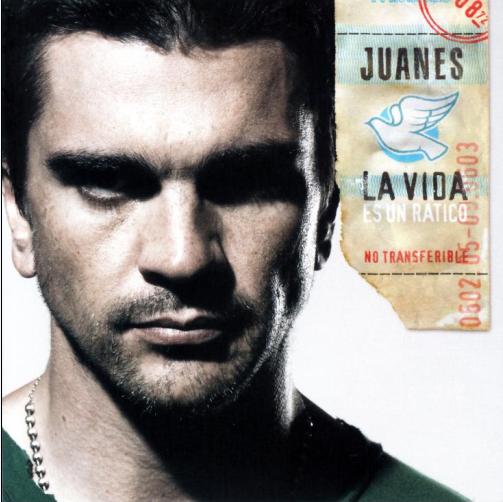
Peace Leader such as Man Hee Lee : Juanes

Juanes: Grammy-award-winning musician talks peace with BBC


3 May 2013 Last updated at 17:01 GMT Help
Grammy-award-winning Colombian musician Juanes is known for his passionate lyrics exploring themes of peace and love.

He has sold 16 million albums in his career, making him the world's top all Spanish-language rock artist.

Juanes has also become a global peace activist, inspired by his childhood in Medellin at the height of civil war. His foundation, Mi Sangre, promotes peace in Colombia by empowering youth affected by violence to become agents of change in their communities.

He is also a co-founder of Paz sin Fronteras, an organisation that uses music to promote peace. In 2008, when tensions rose between Colombia, Ecuador and Venezuela, Juanes played a concert on the border between Colombia and Venezuela to call for a peaceful resolution to the conflict.

He has been named one of Time magazine's 100 Most Influential People in the World, and he received an award for distinguished humanitarian leadership from the Atlantic Council in Washington DC. Before the ceremony, Juanes sat down with the BBC's Katty Kay.


+It would be so cool Man Hee Lee and Juanes have a time to talk about peace together.
They both went through war and talk about Peace.
Regardless nationality, race, age, people can be united as ONE for peace

2013년 7월 11일 목요일

MANNAM Peace Advocates : Russell Einstein Manifesto in 1955

via http://pw20c.mcmaster.ca/ 

The full text of Russell Einstein Manifesto 


In the tragic situation which confronts humanity, we feel that scientists should assemble in conference to appraise the perils that have arisen as a result of the development of weapons of mass destruction, and to discuss a resolution in the spirit of the appended draft.

We are speaking on this occasion, not as members of this or that nation, continent, or creed, but as human beings, members of the species Man, whose continued existence is in doubt. The world is full of conflicts; and, overshadowing all minor conflicts, the titanic struggle between Communism and anti Communism.

Almost everybody who is politically conscious has strong feelings about one or more of these issues; but we want you, if you can, to set aside such feelings and consider yourselves only as members of a biological species which has had a remarkable history, and whose disappearance none of us can desire.

We shall try to say no single word which should appeal to one group rather than another. All, equally, are in peril, and, if the peril is understood, there is hope that they may collectively avert it.

We have to learn to think in a new way. We have to learn to ask ourselves, not what steps can be taken to give military victory to whatever group we prefer, for there are no longer such steps; the question we have to ask ourselves is: what steps can be taken to prevent a military contest of which the issue must be disastrous to all parties?

The general public, and even many men in position of authority, have not realized what would be involved in a war with nuclear bombs. The general public still thinks in terms of obliteration of cities. It is understood that the new bombs are more powerful than the old, and that, while one A-bomb could obliterate Hiroshima, one H- bomb could obliterate the largest cities, such as London, New York and Moscow.

No doubt in an H-bomb war great cities would be obliterated. But this is one of the minor disasters that would have to be faced. If everybody in London, New York and Moscow were exterminated, the world might, in the course of a few centuries, recover from the blow. But we know, especially since the Bikini test, that nuclear bombs can gradually spread destruction over a very much wider area than had been supposed.

It is stated on very good authority that a bomb can now be manufactured which will be 2,500 times as powerful as that which destroyed Hiroshima. Such a bomb, if exploded near the ground or under water, sends radioactive particles into the upper air. They sink gradually and reach the surface of the earth in the form of a deadly dust or rain. It was this dust which infected the Japanese fishermen and their catch of fish.

No one knows how widely such lethal radioactive particles might be diffused, but the best authorities are unanimous in saying that a war with H-bombs might quite possibly put an end to the human race. It is feared that if many H-bombs are used there will be universal death—sudden only for a minority but for the majority a slow torture of disease and disintegration.

Many warnings have been uttered by eminent men of science and by authorities in military strategy. None of them will say that the worst results are certain. What they do say is that these results are possible, and no one- can be sure that they will not be realized. We have not yet found that the views of experts on this question depend in any degree upon their politics or prejudices. They depend only, so far as our researches have revealed, upon the extent of the particular expert's knowledge. We have found that the men who know most are the most gloomy.

Here, then, is the problem which we present to you, stark and dreadful and inescapable: shall we put an end to the human race; or shall mankind renounce war? People will not face this alternative because it is so difficult to abolish war.

The abolition of war will demand distasteful limitations of national sovereignty. But what perhaps impedes understanding of the situation more than anything else is that the term "mankind" feels vague and abstract. People scarcely realize in imagination that the danger is to themselves and their children and their grandchildren, and not only to a dimly apprehended humanity. They can scarcely bring themselves to grasp that they, individually, and those whom they love are in imminent danger of perishing agonizingly. And so they hope that perhaps war may be allowed to continue provided modern weapons are prohibited.

This hope is illusory. Whatever agreements not to use H-bombs had been reached in time of peace, they would no longer be considered binding in time of war, and both sides would set to work to manufacture H-bombs as soon as war broke out, for, if one' side manufactured the bombs and the other did not, the side that manufactured them would inevitably be victorious.

Although an agreement to renounce nuclear weapons as part of a general reduction of armaments would not afford an ultimate solution, it would serve certain important purposes. First: any agreement between East and West is to the good insofar as it tends to diminish tension. Second: the abolition of thermo-nuclear weapons, if each side believed that the other had carried it out sincerely, would lessen the fear of a sudden attack in the style of Pearl Harbour, which at present keeps both sides in a state of nervous-apprehension. We should, therefore, welcome such an agreement, though only as a first step.

Most of us are not neutral in feeling, but as human beings, we have to remember that, if the issues between East and West are to be decided in any manner that can give any possible satisfaction to anybody, whether Communist or anti- Communist, whether Asian or European or American, whether White or Black, then these issues must not be decided by war. We should wish this to be understood, both in the East and in the West.

There lies before us, if we choose, continual progress in happiness, knowledge, and wisdom. Shall we, instead, choose death, because we cannot forget our quarrels? We appeal, as human beings, to human beings: remember your humanity, and forget the rest. If you can do so, the way lies open to a new Paradise; if you cannot, there lies before you the risk of universal death.


+Resolution

We invite this Congress, and through it the scientists of the world and the general public, to subscribe to the following resolution:

In view of the fact that in any future world war nuclear weapons will certainly be employed, and that such weapons threaten the continued existence of mankind, we urge the Governments of the world to realize, and to acknowledge publicly, that their purpose cannot be furthered by a world war, and we urge. them, consequently, to find peaceful means for the settlement of all matters of dispute between them.


Professor Max Born (Professor of Theoretical Physics at Berlin, Frankfurt, and Gottingen, and of Natural Philosophy, Edinburgh; Nobel Prize in physics)
Professor P.W. Bridgman (Professor of Physics, Harvard' University; Nobel Prize in physics)
Professor Albert Einstein
Professor L. Infeld (Professor of Theoretical Physics, University of Warsaw)
Professor J. F. Joliot-Curie (Professor of Physics at the College de France; Nobel Prize in chemistry)
Professor H. J. Muller (Professor of Zoology at the University of Indiana; Nobel Prize in physiology and medicine)
Professor Linus Pauling (Professor of Chemistry, California Institute of Technology; Nobel Prize in chemistry)
Professor J. Rotblat (Professor of Physics, University of London; Medical College of St. Barnholomew's Hospital)
Bertrand Russell

Professor Hideki Yukawa (Professor of Theoretical Physics, Kyoto University; Nobel Prize in physics (Rotblat 1972)


+This became Albert Einstein's will since he died in 18 days after he signed this manifesto eventually.

2013년 7월 9일 화요일

MANNAM peace : North female footballers to play here

via EAFF homepage

The South Korean government approved the visit of North Korea’s national female football team to participate in the fifth 2013 EAFF East Asian Cup, a regional championship competition held in Seoul and Gyeonggi.

Seoul’s Unification Ministry announced its approval in a press release yesterday for the visit of a total of 36 North Korean football players and officials to the South, which was requested by the head of the Korea Football Association, the South Korean organization in charge of arranging the event this year. 

The North Korean women’s team hasn’t played in the South since 2005. 


via sportsbasha

The competition, which already completed the preliminary round in Hong Kong, will be held at the Seoul World Cup Stadium in Sangam-dong, Seoul Olympic Stadium, Jamsil and the Hwaseong Stadium in Gyeonggi, from July 20-28. 

For the women’s matches, four teams are listed at the final tournament - South Korea, North Korea, China and Japan. North Korea’s male team lost in the preliminary round in Hong Kong. 

According to the ministry, they will arrive at the Incheon International Airport via Beijing on July 18 and have three matches - one with South Korea on July 21, Japan on July 25 and China on July 27. They are scheduled to return to the country on July 28. 

Along with the team, a total of 41 members of the General Association of Korean Residents in Japan, an association of North Koreans residing in Japan, will also visit the South to cheer their team. 

The South’s Foreign Ministry is taking legal steps to approve their entrance, the ministry said, and their itinerary is not scheduled yet.

In an effort to improve the competence of players of East Asian countries, the EAFF Cup was launched in 2002. A total of 11 nations in the East Asian region attend the competition, which has been held irregularly. All of the costs for the flight tickets, accommodation and other fees during the competition are covered by the East Asian Football Federation. 

By Kim, Hee-jin [heejin@joongang.co.kr] 

Sports is something very precious among what people do together.
People learn the spirit of team work which can be widen to the idea that people can not live alone via sports.
So many international youth organizations do many sports like MANNAM has Victorycup and etc.
I am personally not that interested in doing exercize.
I am not an athlete pesron but I agree I need to exersize.
:)

2013년 7월 4일 목요일

MANNAM Youth for Peace : Filipino youth at WYD in Rio, "hope" of the Church and society


Hundreds of boys and girls meet will meet Pope Francis in Brazil. A 'official' delegation from the Philippines led by the bishops, but groups of individual communities, institutions and religious organizations are also planned. Bishop of Pasig to young people: "You represent the nation. All of us will be there with you. "


Manila (AsiaNews) - The new generation "are the hope of the Church and society" and it is "our duty" to educate them to become "good and devoted elements " within society as a whole. This is the message delivered by leaders of the Diocese of Pasig - a suffragan of the Archdiocese of Manila, in the Philippines - to the participants at the 28th World Youth Day (WYD), scheduled for July 23 to 28 next to Rio de Janeiro, Brazil. On Sunday, June 30 at the Cathedral of the Immaculate Conception of Pasig Mass was celebrated mandating the diocesan delegates, who will meet Pope Francis and young people from around the world in the metropolis of Rio. Bishop Mylo Hubert Vergara emphasized the importance of "being a missionary for others."


During the Mass, the bishop reminded participants of the importance of their mission and the special experience they will have.  Msgr. Vergara added that it is a "once in a lifetime" opportunity and the meeting with the Pope must be lived in communion "with whole world." "Not everyone has the opportunity to see the Pope in person - he continues - and ... that's why your presence is not only a personal experience. You represent the nation. All of us will be there with you."

In his homily Fr. Joeffrey Brian Catuiran, diocesan youth ministry director, spoke of the importance of young people in the missionary task promoted by the Church, under the motto "go and make disciples of all nations." "Young people are the hope of the Church and of society - said the priest - and we need to help them become [as Pope emeritus Benedict XVI pointed out] good and devout members of the community."

Fr. Catuiran echoed the words of Pope Francis inviting the young people "not to be ashamed to carry the Cross" and to prepare for this special World Youth Day event at "a spiritual level". So that it may be "a sign of faith for the entire world. Welcoming the love of Christ, who embraces us" just like the Redeemer statue that overlooks the city of Rio.

More than 300 young Filipinos will participate in the WYD in Brazil. Accompanying them will be the President of the Philippine Bishops Conference and Archbishop of Cebu Jose Palma, along with four other bishops and numerous priests. The number of young Filipinos, however, could be much higher, because many schools, institutes, autonomous communities are organizing delegations that will be present in Rio for the days of celebration and prayer. The "official" Episcopal Conference delegation leaves for Brazil between July 13 and 15, in time to celebrate the missionary days 17-21. They will be hosted by the Diocese of Petropolis, about 70 km from Rio de Janeiro


+Adults and whole world have hope on Youth for Peace.
Some genuine heart, some willingness for others, some positive energy can inspire all the societies...
Those values are seen through YOUTH.

I hope all the international youth gather together and step forward for ONE purpose, World Peace.
That would be so amazing and touching.
Will be more of Youth gathering than before.

So YOUTH guys! 
Are you ready to become main characters who can change the world?:)