 |
| http://www.koreatimes.co.kr/www/news/nation/2013/09/115_142447.html
About seven thousand participants ran for peace in or near the demilitarized zone between South Korea and North Korea this past weekend. Many runners say that running is a lifestyle. It affects every other aspect of their lives. I hope this would be true for people's desire for peace as well. May peace not just be a word we toss out now and then, but a way of living we are committed to.
May the looks of determination on these runners' faces inspire us to strive for peace. |
2013년 9월 11일 수요일
MANNAM Peace News: DMZ Peace Marathon

2013년 8월 1일 목요일
MANNAM Peace News : S. Korea won't forget your help in Korean war to New Zealand war veterans

South Korean President Park, Gun-Hye had a summit with John Key Prime Minister of New Zealand promoted cooperation of two countries. John Key Prime Minister visited S. Korea to commemorate the 60th anniversary of the cease-fire agreement. S. Korea President Park, Gun-Hye appreciated the noble sacrifice of New Zealander veterans of the Korean war and it led South Korea could keep free democracy and has the current success. Especially she spoke with emphasis that the New Zealand soldiers were less than 10,000 people totally but 6,000 people took a part in Korean war and the Korean war veterangs have awarded scholarships to the young in Ga-pyoung area where was the hard-fought field. And she spoke that it is so moving and Korean people won't forget your dedication and support.

New Zealand (/njuːˈziːlənd/; Māori: Aotearoa [aɔˈtɛaɾɔa]) is an island country in the southwestern Pacific Ocean. The country geographically comprises two main landmasses ‒ that of the North and South Islands ‒ and numerous smaller islands. New Zealand is situated some 1,500 kilometres (900 mi) east of Australia across the Tasman Sea and roughly 1,000 kilometres (600 mi) south of the Pacific island nations of New Caledonia, Fiji, and Tonga. Because of its remoteness, it was one of the last lands to be settled by humans. During its long isolation, New Zealand developed a distinctive biodiversity of animal, fungal and plant life; most notable are the large number of unique bird species. The country's varied topography and its sharp mountain peaks owe much to the tectonic uplift of land and volcanic eruptions.
Polynesians settled New Zealand in 1250–1300 CE and developed a distinctive Māori culture, and Europeans first made contact in 1642 CE. The introduction of potatoes and muskets triggered upheaval among Māori early during the 19th century, which led to the inter-tribal Musket Wars. In 1840 the British and Māori signed a treaty making New Zealand a colony of the British Empire. Immigrant numbers increased sharply and conflicts escalated into the New Zealand Wars, which resulted in much Māori land being confiscated in the mid North Island. Economic depressions were followed by periods of political reform, with women gaining the vote during the 1890s, and a welfare state being established from the 1930s. After World War II, New Zealand joined Australia and the United States in the ANZUS security treaty, although the United States later suspended the treaty. New Zealanders enjoyed one of the highest standards of living in the world in the 1950s, but the 1970s saw a deep recession, worsened by oil shocks and the United Kingdom's entry into the European Economic Community. The country underwent major economic changes during the 1980s, which transformed it from a protectionist to a liberalised free trade economy; once-dominant exports of wool have been overtaken by dairy products, meat, and wine.
The majority of New Zealand's population is of European descent; the indigenous Māori are the largest minority, followed by Asians and non-Māori Polynesians. English, Māori and New Zealand Sign Language are the official languages, with English predominant. Much of New Zealand's culture is derived from Māori and early British settlers. Early European art was dominated by landscapes and to a lesser extent portraits of Māori. A recent resurgence of Māori culture has seen their traditional arts of carving, weaving and tattooing become more mainstream. The country's culture has also been broadened by globalisation and increased immigration from the Pacific Islands and Asia. New Zealand's diverse landscape provides many opportunities for outdoor pursuits and has provided the backdrop for a number of big budget movies.
New Zealand is organised into 11 regional councils and 67 territorial authorities for local government purposes; these have less autonomy than the country's long defunct provinces did. Nationally, executive political power is exercised by the Cabinet, led by the Prime Minister. Queen Elizabeth II is the country's head of state and is represented by a Governor-General. The Queen's Realm of New Zealand also includes Tokelau (a dependent territory); the Cook Islands and Niue (self-governing but in free association); and the Ross Dependency, which is New Zealand's territorial claim in Antarctica. New Zealand is a member of the Asia-Pacific Economic Cooperation, Commonwealth of Nations, Organisation for Economic Co-operation and Development, Pacific Islands Forum, and the United Nations.
+
Such a peace maker country, New Zealand.
My personal favorite country, New Zealand.
I would love to go back to New Zealand and do good work for peace in MANNAM volunteer association.
-
Donga News
New Zealand image
Wikipedia
2013년 7월 30일 화요일
MANNAM Peace News : Bird hunters 'emptying Afghan skies' and Suncheon Bay (2)
Suncheon Bay Ecological Park is a protected natural area near Suncheon, South Korea. It is effectively a bay between Yeosu peninsula and Goheung peninsula. It is located 8 km (5.0 mi) from the center of Suncheon, and has 21.6 km2 (8.3 sq mi) of mudflats and 5.4 km2 (2.1 sq mi) of reed beds.
From the junction of the Dong stream and Isa stream to the front of the mudflat in Suncheon bay, it has the widest reed bed in Korea. In autumn, reed blossoms, red turkeis, and white migratory birds make the area a popular attraction.

Suncheon Bay is the treasure house of having the various many species.
It is very important to be studied. Because of little pollution sources, It has the developed salt swampy land. It abounds in fresh marine products, multifarious invertebrate animal and sea plant.
The extensive reedbeds is the wintering site and the habitat for the national rare birds which are a hooded crane, a sea gull, a white stoke, a blackfaced spoonbill and a white heron etc.
Suncheon bay is known to be the area which rare birds inhabit and especially the unique habitat of a hooded crane.
Convention-Swamp is the most productive life supporting ecosystem. The protection of it is very important in biological, hydraulical, and economic reasons. Even so, in many parts of the earth, swamps are damaged due to irrigation, reclamation, pollution and such. To stop the damage to swamps, international conference and technological conference were held in sequence sponsored by International Waterfowl Research Bureau in 1960. As the result of conferences, a conference was joined in Ramsar, Iran on February 2, 1971. The established form of Ramsar Convention is Convention on Wetlands of International Importance especially as Waterfowl Habitat. Korea joined this convention on July 28, 1997 as the 101st. Young Swamp of Daeam Mountain in Inje-gun, Gangwon-do and Upo Swamp in Changnyeong-gun, Gyeongnam are registered as Ramsar Swamps.
Suncheon Bay started to gain attention as the fact that waterfowls enlisted in Ramsar Convention became known. Especially it satisfies 'various kinds of birds requiring different types of habitat inhabiting' part of Ramsar Conventions. It makes Suncheon Bay a very proper candidate to become a Ramsar Swamp. Suncheon bay was designated as a swamp preserving area of Korea in December, 2003, and it joined 'international network for protection of crane in northeastern Asia' in 2004. Northeastern Crane Network was organized as a protection strategy of Asian and Pacific passage birds at the 6th Ramsar Convention conference in 1996. Also, Ministry of Maritime Affairs and Fisheries of Korea will request registering of Suncheon Bay as Ramsar Swamp in August or September this year. If it becomes a Ramsar Swamp, the natural environment of Suncheon Bay, the treasure house of ecosystem, will be better preserved.
via Wikipedia

+
I am not judging Environment Afghanistan in this way but saying South Korea used to be one of countries who didn't have a chance to give attention to birds and environment since this country had to go over many situations.
But have a look how this country has grew up, and the hit spot saying "we can give a care to others" is Suncheon Bay(I personally think it this way but pretty much sure others would agree with me!).
South Korea has Suncheon Bay which is my favorite place among many beatiful spots in my home country.
If you have an idea to come and visit Korea, you should swing by Suncheon Bay(It's not enough to swing by though! lol).
+
Do I love my home country?
Yes as you can see.
Because it has Suncheon Bay?
Partly.
And Plus, MANNAM Volunteer Association's head office is located in South Korea too :)
From the junction of the Dong stream and Isa stream to the front of the mudflat in Suncheon bay, it has the widest reed bed in Korea. In autumn, reed blossoms, red turkeis, and white migratory birds make the area a popular attraction.

Suncheon Bay is the treasure house of having the various many species.
It is very important to be studied. Because of little pollution sources, It has the developed salt swampy land. It abounds in fresh marine products, multifarious invertebrate animal and sea plant.
The extensive reedbeds is the wintering site and the habitat for the national rare birds which are a hooded crane, a sea gull, a white stoke, a blackfaced spoonbill and a white heron etc.
Suncheon bay is known to be the area which rare birds inhabit and especially the unique habitat of a hooded crane.
Convention-Swamp is the most productive life supporting ecosystem. The protection of it is very important in biological, hydraulical, and economic reasons. Even so, in many parts of the earth, swamps are damaged due to irrigation, reclamation, pollution and such. To stop the damage to swamps, international conference and technological conference were held in sequence sponsored by International Waterfowl Research Bureau in 1960. As the result of conferences, a conference was joined in Ramsar, Iran on February 2, 1971. The established form of Ramsar Convention is Convention on Wetlands of International Importance especially as Waterfowl Habitat. Korea joined this convention on July 28, 1997 as the 101st. Young Swamp of Daeam Mountain in Inje-gun, Gangwon-do and Upo Swamp in Changnyeong-gun, Gyeongnam are registered as Ramsar Swamps.
Suncheon Bay started to gain attention as the fact that waterfowls enlisted in Ramsar Convention became known. Especially it satisfies 'various kinds of birds requiring different types of habitat inhabiting' part of Ramsar Conventions. It makes Suncheon Bay a very proper candidate to become a Ramsar Swamp. Suncheon bay was designated as a swamp preserving area of Korea in December, 2003, and it joined 'international network for protection of crane in northeastern Asia' in 2004. Northeastern Crane Network was organized as a protection strategy of Asian and Pacific passage birds at the 6th Ramsar Convention conference in 1996. Also, Ministry of Maritime Affairs and Fisheries of Korea will request registering of Suncheon Bay as Ramsar Swamp in August or September this year. If it becomes a Ramsar Swamp, the natural environment of Suncheon Bay, the treasure house of ecosystem, will be better preserved.
via Wikipedia

+
I am not judging Environment Afghanistan in this way but saying South Korea used to be one of countries who didn't have a chance to give attention to birds and environment since this country had to go over many situations.
But have a look how this country has grew up, and the hit spot saying "we can give a care to others" is Suncheon Bay(I personally think it this way but pretty much sure others would agree with me!).
South Korea has Suncheon Bay which is my favorite place among many beatiful spots in my home country.
If you have an idea to come and visit Korea, you should swing by Suncheon Bay(It's not enough to swing by though! lol).
+
Do I love my home country?
Yes as you can see.
Because it has Suncheon Bay?
Partly.
And Plus, MANNAM Volunteer Association's head office is located in South Korea too :)
MANNAM Peace News : Bird hunters 'emptying Afghan skies' and Suncheon Bay (1)
Bird hunters 'emptying Afghan skies'
By Bilal Sarwary, BBC News, Parwan and Kapisa provinces

Untold numbers of migratory birds are being caught and killed every year in Afghanistan, helping drive species like the Siberian Crane to the verge of extinction. Hunters say other bird populations are also declining rapidly, raising fears among environmentalists.
Noar Agha loads small stones into the leather pouch attached to his homemade sling shot. "This is like a big transit airport for birds," he says, pointing to a lush valley ringed by snowy Hindu Kush peaks in Parwan province, about 160km (100 miles) from Kabul.
Syed Khel district's wheat fields and orchards offer a perfect resting point for migratory birds.
"Thousands of White-naped Cranes, flamingos, ducks, falcons and sparrows migrate from India and Pakistan when summer temperatures begin to rise there. They make a stopover here before taking off for Russia. That's when we make a move," Mr Agha says.
About a dozen of his grandchildren nod in appreciation. Then a boy perched on a tree top waves a piece of cloth and Mr Agha orders everyone to scatter. Soon a huge flock of sparrows descends on the valley.
He and his grandchildren fire a volley of stones from their sling shots. As dozens of sparrows crash to the ground, three hunting dogs are let loose. They quickly retrieve the injured birds, including those that dropped far from sight.
Like Noar Agha, many Afghans hunt birds for meat. There is also a thriving trade in canaries and finches which are trapped, sold and smuggled to Iran, Pakistan and Gulf countries, where they are popular as house pets.
The head of Afghanistan's Environment Protection Agency, Mustafa Zahir, recently told a local TV news channel that nearly 5,000 birds are smuggled out of the country every year. That may be a conservative estimate. Many of these are falcons and Hubara Bustards - the latter widely prized as quarry by hunters in the Gulf.
With the Afghan economy in tatters, hunting and trading in birds offers a welcome source of income for many struggling Afghans. Markets selling birds of all shapes and sizes - dead or alive - are fairly common in remote areas like Syed Khel and Kohistan.
"This is how I make a living," says one hunter in a bird bazaar in Kohistan, pointing to a sack full of dead sparrows. "There is no work here. What else can I do?"
The sparrows in question are probably Spanish Sparrows, whose numbers are not thought to be at risk, Taej Mundkur of Wetlands International tells the BBC. But he adds: "The harvest could well extend to other species as well."
In truth, no one really knows.
In a country which has seen decades of war, the welfare of birds is low on the list of priorities. The Siberian Crane, once a regular visitor en route to India, has not been sighted in Afghanistan since 1999. It is now listed as globally critically endangered.
Other birds are also now less common, say Afghan hunters.
"My elders used to talk about cranes, flamingos, wild ducks and quails. These birds were very common in this part of the country. But now it is no longer so," says 27-year-old Mohammad Wahid.
That view is shared by Mohammad Agha, 70: "There are just too many hunters… so the birds have fled."
A few kilometres along the Panjshir river in Kohistan district, Haji Dost Mohammad has hunted ducks for half of his life and says every house in his village has a shotgun. Mr Mohammad, 40, starts his days early during the migrating season.
"Every day before sunrise, we put stuffed ducks in our village pond. When a flock of birds arrive, drakes are attracted to the pond. We wait as the drakes try to pair up with the stuffed ducks. Just when they are about to settle on the pond, we fire," he says.
Huge nets are used, too, to trap entire flocks of birds.
"They spread themselves across the gaps in the mountains carrying the ends of these nets. When a flock passes through the gap the ends are pulled, forcing hundreds of birds to fly straight into the nets," one village elder said.
In some places, large wooden bird boxes with paraffin lamps are hung on trees. The warmth draws the birds, which fall into the concealed trap.
Such methods can result in huge catches. I saw one hunter bagging up birds by the hundred for a local party. Two local shopkeepers caught at least 500 birds each in a single day to sell at market.
It is impossible to know how many birds are being killed in Afghanistan every year, but the kind of hunting I saw is going on right across the country - so the figure would appear to be in the hundreds of thousands every year, at least.
The authorities say they are aware of the situation, with one senior official in Parwan even calling it a "genocide of birds".
"But you have to understand that this is the way of life here. Hunting of birds has been going on for hundreds of years. Besides, many government officials are themselves hunters. Who will speak against them?"
The government banned the hunting of migratory birds five years ago in a presidential decree but the law is still to go through parliament - and the ban is barely enforced.
"We are also working with religious scholars and other influential members of society to start an awareness campaign on the ill effects of excessive hunting," Ghulam Mohammad Malikyar, deputy director-general of Afghanistan's National Environmental Protection Agency, told the BBC.
Educating Afghans is one challenge. Another is the lack of reliable information - because of decades of instability, no comprehensive survey on bird numbers has ever been conducted.
Qais Agah of Save the Environment-Afghanistan said there had been "significant conservation efforts", but told the BBC a recent study had identified almost 150 endangered species of birds in Afghanistan, which is not a party to the Convention on Migratory Species.
Some birds may have changed their migration routes, which would explain the apparent drop in their numbers in Afghanistan. Or Afghans may be wiping them out.
Without proper scientific data, it is impossible to know. What is clear is that hunters say some birds are now seen more rarely, or not at all.
"Thirty years ago, I used to shoot 500-700 sparrows a day with my sling shot," says Haji Shakoor, 57, from Salang valley. "The sky used to be full of birds. But now it seems so empty."
Conservationists hope that doesn't mean more birds go the way of the Siberian Crane.
BBC News
Continue to the following post
By Bilal Sarwary, BBC News, Parwan and Kapisa provinces

Untold numbers of migratory birds are being caught and killed every year in Afghanistan, helping drive species like the Siberian Crane to the verge of extinction. Hunters say other bird populations are also declining rapidly, raising fears among environmentalists.
Noar Agha loads small stones into the leather pouch attached to his homemade sling shot. "This is like a big transit airport for birds," he says, pointing to a lush valley ringed by snowy Hindu Kush peaks in Parwan province, about 160km (100 miles) from Kabul.
Syed Khel district's wheat fields and orchards offer a perfect resting point for migratory birds.
"Thousands of White-naped Cranes, flamingos, ducks, falcons and sparrows migrate from India and Pakistan when summer temperatures begin to rise there. They make a stopover here before taking off for Russia. That's when we make a move," Mr Agha says.
About a dozen of his grandchildren nod in appreciation. Then a boy perched on a tree top waves a piece of cloth and Mr Agha orders everyone to scatter. Soon a huge flock of sparrows descends on the valley.
He and his grandchildren fire a volley of stones from their sling shots. As dozens of sparrows crash to the ground, three hunting dogs are let loose. They quickly retrieve the injured birds, including those that dropped far from sight.
Like Noar Agha, many Afghans hunt birds for meat. There is also a thriving trade in canaries and finches which are trapped, sold and smuggled to Iran, Pakistan and Gulf countries, where they are popular as house pets.
The head of Afghanistan's Environment Protection Agency, Mustafa Zahir, recently told a local TV news channel that nearly 5,000 birds are smuggled out of the country every year. That may be a conservative estimate. Many of these are falcons and Hubara Bustards - the latter widely prized as quarry by hunters in the Gulf.
With the Afghan economy in tatters, hunting and trading in birds offers a welcome source of income for many struggling Afghans. Markets selling birds of all shapes and sizes - dead or alive - are fairly common in remote areas like Syed Khel and Kohistan.
"This is how I make a living," says one hunter in a bird bazaar in Kohistan, pointing to a sack full of dead sparrows. "There is no work here. What else can I do?"
The sparrows in question are probably Spanish Sparrows, whose numbers are not thought to be at risk, Taej Mundkur of Wetlands International tells the BBC. But he adds: "The harvest could well extend to other species as well."
In truth, no one really knows.
In a country which has seen decades of war, the welfare of birds is low on the list of priorities. The Siberian Crane, once a regular visitor en route to India, has not been sighted in Afghanistan since 1999. It is now listed as globally critically endangered.
Other birds are also now less common, say Afghan hunters.
"My elders used to talk about cranes, flamingos, wild ducks and quails. These birds were very common in this part of the country. But now it is no longer so," says 27-year-old Mohammad Wahid.
That view is shared by Mohammad Agha, 70: "There are just too many hunters… so the birds have fled."
A few kilometres along the Panjshir river in Kohistan district, Haji Dost Mohammad has hunted ducks for half of his life and says every house in his village has a shotgun. Mr Mohammad, 40, starts his days early during the migrating season.
"Every day before sunrise, we put stuffed ducks in our village pond. When a flock of birds arrive, drakes are attracted to the pond. We wait as the drakes try to pair up with the stuffed ducks. Just when they are about to settle on the pond, we fire," he says.
Huge nets are used, too, to trap entire flocks of birds.
"They spread themselves across the gaps in the mountains carrying the ends of these nets. When a flock passes through the gap the ends are pulled, forcing hundreds of birds to fly straight into the nets," one village elder said.
In some places, large wooden bird boxes with paraffin lamps are hung on trees. The warmth draws the birds, which fall into the concealed trap.
Such methods can result in huge catches. I saw one hunter bagging up birds by the hundred for a local party. Two local shopkeepers caught at least 500 birds each in a single day to sell at market.
It is impossible to know how many birds are being killed in Afghanistan every year, but the kind of hunting I saw is going on right across the country - so the figure would appear to be in the hundreds of thousands every year, at least.
The authorities say they are aware of the situation, with one senior official in Parwan even calling it a "genocide of birds".
"But you have to understand that this is the way of life here. Hunting of birds has been going on for hundreds of years. Besides, many government officials are themselves hunters. Who will speak against them?"
The government banned the hunting of migratory birds five years ago in a presidential decree but the law is still to go through parliament - and the ban is barely enforced.
"We are also working with religious scholars and other influential members of society to start an awareness campaign on the ill effects of excessive hunting," Ghulam Mohammad Malikyar, deputy director-general of Afghanistan's National Environmental Protection Agency, told the BBC.
Educating Afghans is one challenge. Another is the lack of reliable information - because of decades of instability, no comprehensive survey on bird numbers has ever been conducted.
Qais Agah of Save the Environment-Afghanistan said there had been "significant conservation efforts", but told the BBC a recent study had identified almost 150 endangered species of birds in Afghanistan, which is not a party to the Convention on Migratory Species.
Some birds may have changed their migration routes, which would explain the apparent drop in their numbers in Afghanistan. Or Afghans may be wiping them out.
Without proper scientific data, it is impossible to know. What is clear is that hunters say some birds are now seen more rarely, or not at all.
"Thirty years ago, I used to shoot 500-700 sparrows a day with my sling shot," says Haji Shakoor, 57, from Salang valley. "The sky used to be full of birds. But now it seems so empty."
Conservationists hope that doesn't mean more birds go the way of the Siberian Crane.
BBC News
Continue to the following post
2013년 7월 29일 월요일
MANNAM Peace News : What MANNAM and the world want to achieve for Syria
G8 backs urgent Syria peace talks in Geneva

G8 leaders meeting in Northern Ireland have backed calls for Syrian peace talks to be held in Geneva "as soon as possible".
After adopting a statement, UK Prime Minister David Cameron said the leaders had managed "to overcome fundamental differences".
But no timetable for the Geneva talks was given.
The statement does not mention what role Syrian President Bashar al-Assad could play in the future.
Russia is backing President Assad, while the US and its European allies are supporting the rebels.
Earlier on Tuesday, the Kremlin insisted that each of the Syrian sides at the Geneva talks should be able to select their own delegations, sidestepping questions about whether this could leave open a role for Mr Assad.
The communique is largely a reaffirmation of what was said at the Geneva Conference in June 2012, reports the BBC's Jonathan Marcus at the summit in Enniskillen.
Sending signal
The G8 leaders agreed the joint statement on Syria after lengthy discussions at the end their two-day summit.
The seven-point document says that any future transitional government should be "formed by mutual consent".
It stresses that the leaders are united in wanting a negotiated and peaceful end to the conflict that will produce a government "under a top leadership that inspires public confidence."
However, both Russia and the West could interpret such phrasing as their diplomatic success at the summit, correspondents say.
The Kremlin refused to support any statement making Mr Assad's removal from power an explicit goal.
But speaking to reporters after the summit, President Putin said he did not feel "isolated" in Enniskillen despite clashing with other leaders.
At the same time, Mr Cameron pledged at a separate news conference "to learn the lessons from Iraq" by making sure key institutions of the state are maintained through any transition.
The prime minister said it was important to send a signal to the Syrian people that there would be a functioning state once Mr Assad was gone.
This could be seen as encouragement to the Assad supporters perhaps to begin thinking about a future without him, says our correspondent.
The joint statement also condemns "any use of chemical weapons in Syria" and urges both Damascus and the rebels at the Geneva conference "to commit to destroying and expelling from Syria all organisations and individuals affiliated to al-Qaeda and any other non-state actors linked to terrorism".
On the humanitarian front, the G8 leaders agreed to provide nearly $1.5bn (£960m) in new funds to help people affected by the raging conflict.
More than 4.25 million people have been displaced since the Syrian conflict began in March 2011.
More than 90,000 people have been killed, according to UN estimates.
In Enniskillen, the leaders also signed a declaration committing themselves to "fight the scourge of tax evasion" and promote free trade.

Vladimir Putin: Russia and US to draft Syria peace plan
Russia and the US will be responsible for drafting the "underlying principles" of a settlement to help end the Syrian crisis, the Russian president has confirmed.
Speaking at the end of the two-day summit in Northern Ireland, Vladimir Putin said some G8 members had agreed with the Russian position, that there was no proof that the ruling Assad regime had used chemical weapons, but that there were cases of opposition forces being caught with them.
The Russian president said that all evidence would be presented to the UN Security Council with Russia, as a permanent member, "actively assessing the situation".
via BBC News
+
How sad it is!
How miserable what's been happening to the people, especially kids in Syria!
You have no known person in Syria?
Still I and you live in the same world.
Do you and do I think this such civil war in Syria is none of our business?
You know the answer if you have heart as human-being.
Why don't we make time to have peace talk?
Why don't we find some group which consider peace as the most valuable and the necessary in the world?
You know I am saying MANNAM International Association led by a peace leader, Man Hee Lee :)
We actualize Peace in our real lives!
Come and join us!
MANNAM International Association

G8 leaders meeting in Northern Ireland have backed calls for Syrian peace talks to be held in Geneva "as soon as possible".
After adopting a statement, UK Prime Minister David Cameron said the leaders had managed "to overcome fundamental differences".
But no timetable for the Geneva talks was given.
The statement does not mention what role Syrian President Bashar al-Assad could play in the future.
Russia is backing President Assad, while the US and its European allies are supporting the rebels.
Earlier on Tuesday, the Kremlin insisted that each of the Syrian sides at the Geneva talks should be able to select their own delegations, sidestepping questions about whether this could leave open a role for Mr Assad.
The communique is largely a reaffirmation of what was said at the Geneva Conference in June 2012, reports the BBC's Jonathan Marcus at the summit in Enniskillen.
Sending signal
The G8 leaders agreed the joint statement on Syria after lengthy discussions at the end their two-day summit.
The seven-point document says that any future transitional government should be "formed by mutual consent".
It stresses that the leaders are united in wanting a negotiated and peaceful end to the conflict that will produce a government "under a top leadership that inspires public confidence."
However, both Russia and the West could interpret such phrasing as their diplomatic success at the summit, correspondents say.
The Kremlin refused to support any statement making Mr Assad's removal from power an explicit goal.
But speaking to reporters after the summit, President Putin said he did not feel "isolated" in Enniskillen despite clashing with other leaders.
At the same time, Mr Cameron pledged at a separate news conference "to learn the lessons from Iraq" by making sure key institutions of the state are maintained through any transition.
The prime minister said it was important to send a signal to the Syrian people that there would be a functioning state once Mr Assad was gone.
This could be seen as encouragement to the Assad supporters perhaps to begin thinking about a future without him, says our correspondent.
The joint statement also condemns "any use of chemical weapons in Syria" and urges both Damascus and the rebels at the Geneva conference "to commit to destroying and expelling from Syria all organisations and individuals affiliated to al-Qaeda and any other non-state actors linked to terrorism".
On the humanitarian front, the G8 leaders agreed to provide nearly $1.5bn (£960m) in new funds to help people affected by the raging conflict.
More than 4.25 million people have been displaced since the Syrian conflict began in March 2011.
More than 90,000 people have been killed, according to UN estimates.
In Enniskillen, the leaders also signed a declaration committing themselves to "fight the scourge of tax evasion" and promote free trade.
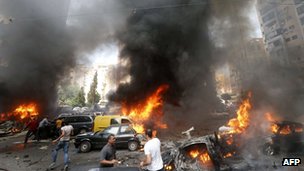
Vladimir Putin: Russia and US to draft Syria peace plan
Russia and the US will be responsible for drafting the "underlying principles" of a settlement to help end the Syrian crisis, the Russian president has confirmed.
Speaking at the end of the two-day summit in Northern Ireland, Vladimir Putin said some G8 members had agreed with the Russian position, that there was no proof that the ruling Assad regime had used chemical weapons, but that there were cases of opposition forces being caught with them.
The Russian president said that all evidence would be presented to the UN Security Council with Russia, as a permanent member, "actively assessing the situation".
via BBC News
+
How sad it is!
How miserable what's been happening to the people, especially kids in Syria!
You have no known person in Syria?
Still I and you live in the same world.
Do you and do I think this such civil war in Syria is none of our business?
You know the answer if you have heart as human-being.
Why don't we make time to have peace talk?
Why don't we find some group which consider peace as the most valuable and the necessary in the world?
You know I am saying MANNAM International Association led by a peace leader, Man Hee Lee :)
We actualize Peace in our real lives!
Come and join us!
MANNAM International Association
2013년 7월 27일 토요일
MANNAM : Word has peace and touches people's heart : J. Donald Walters

You will find peace not by trying to escape your problems, but by confronting them courageously.
You will find peace not in denial, but in victory.
J. Donald Walters

+
When Light meets Light, there is Victory
Have you heard of it?
very familiar sound? :)
This is a main slogan of MANNAM Volunteer Association.
MANNAM Volunteer Association considers people who have willingness to help others regardless of Nationalities, Religion, Sex, Ages.. as light which is so necessary.
A person who is light meets another person who is so, there will be a victory beyond darkness.
It's what Man Hee Lee, such a peace advocate said.
2013년 7월 25일 목요일
MANNAM Peace : Peace Park Morokulien

+ Do you remember my previous post about DMZ world peace park in South Korea? I will add more of this :) DMZ wolrd peace park in S Korea
In German
Morokulien ist der Name eines sechs Hektar großen Geländes beiderseits
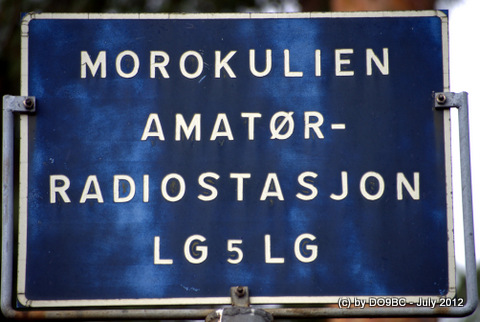
der Staatsgrenze von Schweden und Norwegen, etwa 111 Kilometer östlich von Oslo und 427 Kilometer westlich von Stockholm gelegen. Das Gelände gehört auf der einen Seite zu der norwegischen Gemeinde Eidskog in der Provinz (Fylke) Hedmark und auf der anderen Seite zu der schwedischen Gemeinde Eda in der Provinz (Län) Värmland. 1914 wurde hier anlässlich des 100-jährigen Friedens zwischen beiden Ländern ein Granitmonument errichtet, was deren Einheit und Freundschaft versinnbildlicht. Seitdem wird dieses kleine „neutrale Land“ auch als Platz des Friedens bezeichnet. In Morokulien befinden sich unter anderem Campingplätze, ein Informationszentrum, eine Amateurfunkstation, eine Freilichtbühne, eine Kapelle (Glockenturm in Norwegen – der Rest des Gebäudes in Schweden) sowie weitere Kuriositäten wie z. B. ein Postamt, das Briefmarken beider Länder verkauft und sie auch in beiden abstempelt. Jedes Jahr im Sommer finden hier ein Gottesdienst und weitere Feierlichkeiten statt.
Der Begriff Morokulien ist ein 1959 kreiertes Svorsk-Kofferwort und leitet sich von dem norwegischen Wort moro und dem schwedischen Wort kul ab, welche beide „Spaß“ bedeuten.
Morokulien ist weder ein selbständiger Zwergstaat noch eine Mikronation. Er unterliegt schwedischen und norwegischen Gesetzen. Die dortigen Aktivitäten werden von Friedensvereinigungen beider Länder organisiert.
Morokulien zählt zu den Peace Parks, da es einen Park darstellt, der über Landesgrenzen hinweg reicht.

In English
Morokulia is the name of six acres of grounds on both sides of the state border of Sweden and Norway , about 111 kilometers east of Oslo and 427 kilometers west of Stockholm located. The site is on the one side to the Norwegian community Eidskog in the province ( Fylke ) Hedmark and on the other side to the Swedish municipality of Eda in the province ( countries ) Värmland . 1914 here was the occasion of 100 years of peace between the two countries granite monument erected, which symbolizes their unity and friendship. Since then, this small is " neutral country "also known as a place of peace. In Morokulia are among other campsites, an information center, an amateur radio station , an open air theater, a chapel ( bell tower in Norway - the rest of the building in Sweden) and other curiosities such as a post office, the stamps sold in both countries, and they also abstempelt both. Each summer, here are a worship place and other celebrations.
The term Morokulia is a 1959 kreiertes Svorsk - portmanteau word and is derived from the Norwegian word moro and the Swedish word kul from, which both mean "fun".
Morokulia is neither an independent mini-state or a micro-nation . It is subject to Swedish and Norwegian laws . The activities are organized by local peace organizations of both countries.
Morokulia one of the Peace Park , as it is a park that stretches across national borders
In Korean
Morokulia은 여섯의 이름 에이커 의 상태 국경의 양쪽에 지상의 스웨덴 과 노르웨이 의 약 111 킬로미터 동쪽, 오슬로 와 427km 서쪽 스톡홀름 있습니다. 이 사이트는 노르웨이 사회의 한면에 Eidskog 지방 (에서 Fylke ) 마르크 와 스웨덴의 지방 자치에 다른 쪽 에다 지방 ( 국가 ) 베름 란드 . 여기에 1914 년 두 나라 사이에 평화의 100 년 즈음이었다 화강암 기념물 들의 화합과 우정을 상징 건립. 그 이후,이 작은 " 중립 평화의 장소로 알려진 나라 ". Morokulia의 다른 야영장, 정보 센터, 중입니다 아마추어 라디오 방송국 , 노천 극장, 예배당 ( 벨 타워 와 같은 우체국 등 다른 호기심, - 스웨덴에있는 건물의 나머지 노르웨이) 우표 그들은 또한 두 나라에서 판매, 그리고 모두 abstempelt. 매년 여름 여기입니다 예배 장소 및 기타 행사.
용어 Morokulia는 1959 kreiertes입니다 Svorsk - 합성어 단어 와에서 파생됩니다 노르웨이어 단어 모로 와 스웨덴어 단어 KUL 모두 "재미"를 의미에서.
Morokulia가 아닌, 독립적 인 미니 상태 또는 마이크로 민족 . 그것은 스웨덴어 노르웨이어 될 법 . 활동은 양국의 지역 평화 단체로 구성되어 있습니다.
Morokulia 한 평화 공원 이 국경을 가로 질러 뻗어 공원으로
Morokulien Peace Park Facebook page
http://www.do9bc.com/
+
Haha It's so fun posting!(I am enjoying posting this very much!)
People gather together for peace regardless of nationality, language...
Peace would lead people to communicate to achieve it and while people achieve Peace, people communicate to understand each other better.
Peace is the Alpha and Omega.

In Korean
Morokulia은 여섯의 이름 에이커 의 상태 국경의 양쪽에 지상의 스웨덴 과 노르웨이 의 약 111 킬로미터 동쪽, 오슬로 와 427km 서쪽 스톡홀름 있습니다. 이 사이트는 노르웨이 사회의 한면에 Eidskog 지방 (에서 Fylke ) 마르크 와 스웨덴의 지방 자치에 다른 쪽 에다 지방 ( 국가 ) 베름 란드 . 여기에 1914 년 두 나라 사이에 평화의 100 년 즈음이었다 화강암 기념물 들의 화합과 우정을 상징 건립. 그 이후,이 작은 " 중립 평화의 장소로 알려진 나라 ". Morokulia의 다른 야영장, 정보 센터, 중입니다 아마추어 라디오 방송국 , 노천 극장, 예배당 ( 벨 타워 와 같은 우체국 등 다른 호기심, - 스웨덴에있는 건물의 나머지 노르웨이) 우표 그들은 또한 두 나라에서 판매, 그리고 모두 abstempelt. 매년 여름 여기입니다 예배 장소 및 기타 행사.
용어 Morokulia는 1959 kreiertes입니다 Svorsk - 합성어 단어 와에서 파생됩니다 노르웨이어 단어 모로 와 스웨덴어 단어 KUL 모두 "재미"를 의미에서.
Morokulia가 아닌, 독립적 인 미니 상태 또는 마이크로 민족 . 그것은 스웨덴어 노르웨이어 될 법 . 활동은 양국의 지역 평화 단체로 구성되어 있습니다.
Morokulia 한 평화 공원 이 국경을 가로 질러 뻗어 공원으로
Morokulien Peace Park Facebook page
http://www.do9bc.com/
+
Haha It's so fun posting!(I am enjoying posting this very much!)
People gather together for peace regardless of nationality, language...
Peace would lead people to communicate to achieve it and while people achieve Peace, people communicate to understand each other better.
Peace is the Alpha and Omega.
피드 구독하기:
글 (Atom)